- Cvetković, V., Šišović, V. (2024). Community Disaster Resilience in Serbia. Belgrade: scientific-professional society for disaster risk management.
- Grozdanić, G., Cvetković, V. (2024). Exploring Multifaceted Factors Influencing Community Resilience to Earthquake-Induced Geohazards: Insights from Montenegro. Belgrade: Scientific-professional Society For Disaster Risk Management.
- Nikolić, N., Cvetković, V., Ivanov, A. (2023). Human resource management in environmental security. Belgrade: Scientific-Professional Society for Disaster Risk Management.
- Tanasić, J., Cvetković, V. (2024). Policy of Crisis Management in Serbia. Belgrade: Scientific-Expert Society for Risk Management in Emergency Situations.
- Cvetković, V. (2019). Upravlјanje rizicima i sistemi zaštite i spasavanja od katastrofa. Naučno-stručno društvo za upravlјanje rizicima u vanrednim situacijama, Beograd;
- Cvetković, V. (2020). Upravlјanje rizicima u vanrednim situacijama. Beograd: Naučno-stručno društvo za upravlјanje rizicima u vanrednim situacijama.
- Cvetković, V. (2021). Bezbednosni rizici i katastrofe. Beograd: Naučno-stručno društvo za upravlјanje rizicima u vanrednim situacijama;
- Cvetković, V. (2022). Taktika zaštite i spasavanja u katastrofama. Beograd: Naučno-stručno društvo za upravlјanje rizicima u vanrednim situacijama.
- Cvetković, V. (2023). Otpornost na katastrofe – Vodič za prevenciju, reagovanje i oporavak. Beograd: Naučno-stručno društvo za upravlјanje rizicima u vanrednim situacijama.
- Cvetković, V., & Čaušić, L. (2022). Zbirka propisa iz oblasti vanrednih situacija. Beograd: Naučno-stručno društvo za upravlјanje rizicima u vanrednim situacijama.
- Cvetković, V., Filipović, M., & Gačić, J. (2019). Zbirka propisa iz oblasti upravlјanja rizicima od katastrofa. Naučno-stručno društvo za upravlјanje rizicima u vanrednim situacijama, Beograd
- Cvetković, V. (2023). Istorijski razvoj Naučno-stručnog društva za upravlјanje rizicima u vanrednim situacijama. Beograd: Naučno-stručno društvo za upravlјanje rizicima u vanrednim situacijama.
- Cvetković, V., & Jovanović, M. (2021). Mitovi o katastrofama: istine i zablude. Beograd: Naučno-stručno društvo za upravlјanje rizicima u vanrednim situacijama.
- Cvetković, V., Martinović, J. (2021). Upravlјanje u nuklearnim katastrofama. Beograd: Naučno-stručno društvo za upravlјanje rizicima u vanrednim situacijama.
- Cvetković, V., Bošković, D., Janković, B., & Andrić, S. (2019). Percepcija rizika od vanrednih situacija. Kriminalističko-policijska akademija, Beograd.
- Cvetković, V. (2017). Metodologija naučnog istraživanja katastrofa – teorije, koncepti i metode. Zadužbina Andrejević, Beograd.
- Miladinović, S., Cvetković, V., & Milašinović, S. (2017). Upravlјanje u kriznim situacijama izazvanim klizištima. Kriminalističko-policijska akademija, Beograd.
- Cvetković, V., Milašinović, S., & Gostimirović, L. (2018). Istorijski razvoj policijskog obrazovanja u Srbiji. Visoka poslovna tehnička škola, Doboj.
- Cvetković, V., Filipović, M. (2017). Pripremlјenost za prirodne katastrofe – preporuke za unapređenje pripremlјenosti. Zadužbina Andrejević, Beograd.
- Cvetković, V. (2013). Interventno-spasilačke službe u vanrednim situacijama. Beograd, Zadužbina Andrejević.
- Jakovlјević, V., Cvetković, V., & Gačić, J. (2015). Prirodne katastrofe i obrazovanje. Beograd: Fakultet bezbednosti, Univerzitet u Beogradu.
- Cvetković, V. (2016). Policija i prirodne katastrofe. Beograd (Instant system): Zadužbina Andrejević.
- Cvetković, V., Gačić, J. (2016). Evakuacija u prirodnim katastrofama. Beograd: Zadužbina Andrejević, 2016.
- Ivanov, A., Cvetković, V. (2016). Prirodni katastrofi – geoprostorna i vremenska distribucija. Univerzitet „Sv. Kliment Ohridski“- Bitola, Fakultet za bezbednost, Skopje.
- Bošković, D., Cvetković, V. (2017). Procena rizika u sprečavanju izvršenja krivičnih dela eksplozivnim materijama. Beograd: Kriminalističko-policijska akademija.
- Cvetković, V. (2023). Spremnost srednjih škola Sliva Zapadne Morave u Republici Srbiji za smanjenje rizika od katastrofa i upravlјanje u vanrednim situacijama. Beograd: Fenomena.
- Cvetković, V. (2023). Integrisano upravlјanje rizicima od katastrofa: pripremlјenost, ublažavanje, odgovor i oporavak. Beograd: Naučno-stručno društvo za upravlјanje rizicima u vanrednim situacijama.
- Cvetković, V. (2021). Pravni i bezbednosni aspekti upravlјanja rizicima od prirodnih i antropogenih katastrofa. Izdavač: Pravni fakultet u Novom Sadu i Naučno-stručno društvo za upravlјanje rizicima u vanrednim situacijama.
Tuesday, April 23, 2024
Knjige iz oblasti studija katastrofa

 Recognized as a leading expert in Disaster Risk Management, with a focus on Risk Reduction, Preparedness, Response, and Recovery
Sunday, April 21, 2024
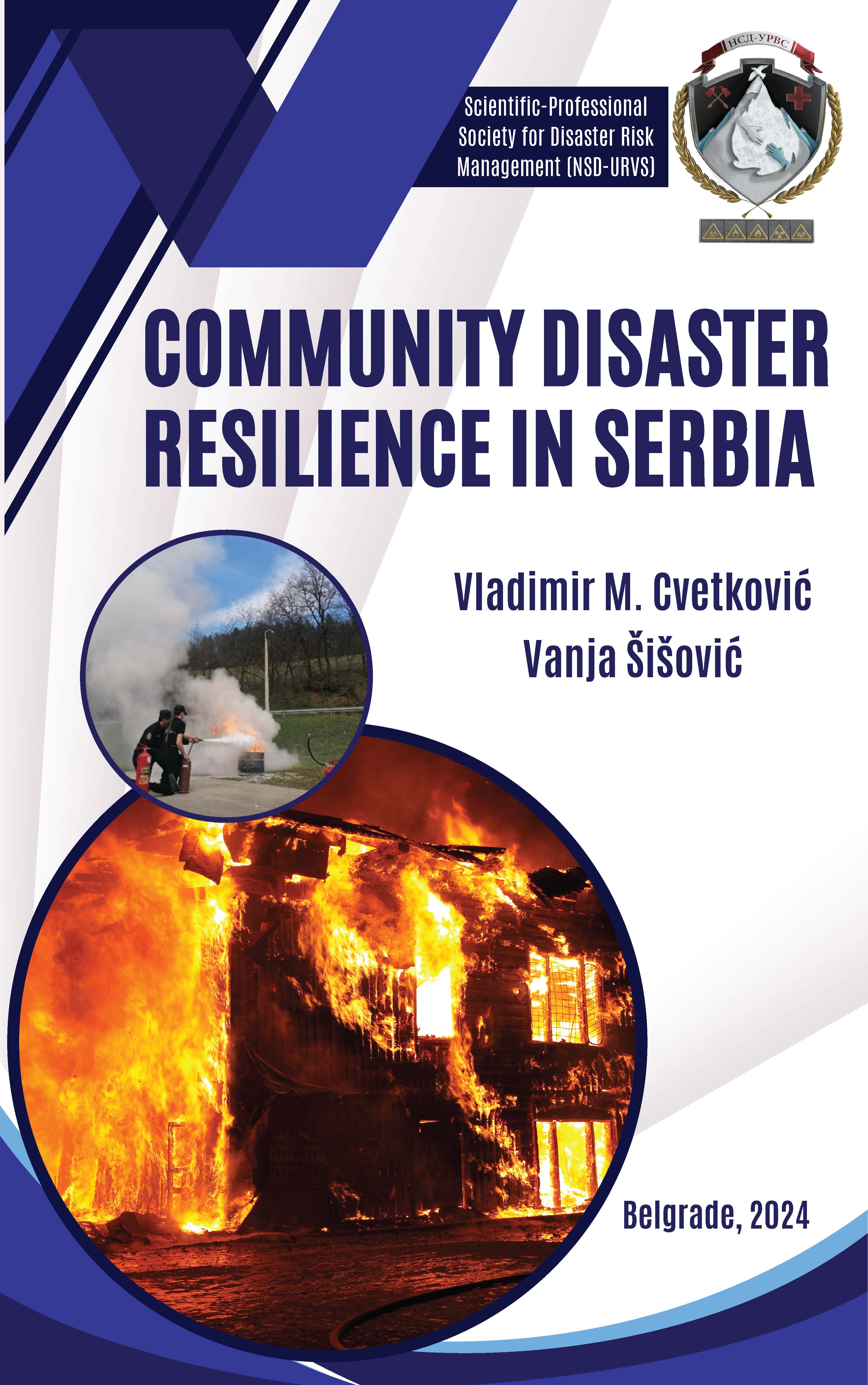
Community Disaster Resilience in Serbia
In the face of natural disasters, communities are often the first line of defence, bearing the brunt of devastation while also displaying remarkable resilience in their aftermath. The ability of societies to withstand, adapt to, and recover from such crises is a testament to the strength and resourcefulness inherent in human communities. This monograph, titled "Community Disaster Resilience in Serbia," represents a concerted effort to delve into the underlying dynamics that shape a community's capacity to cope with natural disasters. Focusing on Serbia, a country with a rich tapestry of social, economic, and demographic complexities, this research endeavors to unravel the intricate interplay between various socio-economic and demographic factors and community resilience. The research methodology employed in this study is grounded in a comprehensive quantitative approach, leveraging rigorous statistical analyses to explore the multifaceted dimensions of community disaster resilience. Through the administration of a carefully crafted questionnaire to 321 participants in January 2024, we sought to capture diverse perspectives and experiences, enriching our understanding of the complex socio-economic and demographic landscape of Serbia. At its core, this study recognizes the critical importance of understanding how factors such as income, employment status, marital status, education, risk perception, gender, and age intersect to influence a community's ability to withstand and recover from natural disasters. By shedding light on these nuanced relationships, we aim to equip policymakers, practitioners, and community leaders with evidence-based insights to enhance disaster preparedness and response efforts. A notable aspect of our methodology is the utilization of the snowball sampling method, which facilitated the organic expansion of our participant pool. By harnessing the networks and connections within communities, we were able to access a diverse array of voices, enriching our dataset and ensuring the robustness of our findings. Central to our inquiry is the exploration of how age, education, and gender intersect with broader social structures, capital, mechanisms, equity, diversity, and beliefs to shape community disaster resilience in Serbia. By elucidating these relationships, we aim to provide insights that can inform targeted interventions and policy initiatives aimed at bolstering community resilience across the country. This monograph holds significant importance in the field of disaster resilience research and practice for several reasons. Firstly, it fills a crucial gap in the existing literature by providing comprehensive insights into the impacts of demographic and socioeconomic factors on community disaster resilience, particularly within the context of Serbia. While studies on disaster resilience abound, there is a notable scarcity of research specifically examining the influence of demographic and socioeconomic factors on resilience in this region. Secondly, the findings of this research offer practical implications for policymakers, government agencies, non-governmental organisations, and community leaders involved in disaster management and resilience-building initiatives. By identifying key predictors and factors influencing community resilience, stakeholders can tailor interventions and strategies to address specific vulnerabilities and enhance the capacity of communities to withstand, adapt to, and recover from disasters effectively. Furthermore, the utilization of robust statistical methods and the comprehensive nature of the research design enhance the reliability and validity of the findings presented in this monograph. The employment of multivariate regression analysis allows for a nuanced understanding of the relationships between various predictors and different dimensions of community disaster resilience, providing valuable insights for both academics and practitioners. Moreover, by employing an adapted version of the ‘5Ssocial resilience framework, this research contributes to the advancement of theoretical frameworks and conceptual models in the field of disaster resilience. The application of such frameworks enables researchers and practitioners to systematically assess and evaluate the complex interplay between social, economic, and environmental factors shaping community resilience, thereby facilitating more informed decision-making and resource allocation. Overall, this monograph serves as a seminal contribution to the burgeoning field of disaster resilience, offering evidence-based insights and actionable recommendations for enhancing resilience-building efforts in Serbia and beyond. Its significance lies not only in its empirical findings but also in its potential to inform policy development, guide practice, and inspire further research in the pursuit of building more resilient and adaptive communities worldwide. As we embark on this intellectual journey, we extend our gratitude to all those who have contributed to this endeavor, from the participants who generously shared their insights to the researchers and practitioners whose expertise has guided our inquiry. We hope this monograph will serve as a valuable resource for academics, policymakers, and practitioners alike, fostering dialogue and collaboration in our collective efforts to build more resilient communities in Serbia and beyond. Conclusion: The resilience of social communities to natural disasters represents an important research area in the field of disaster studies. By enhancing the level of such resilience, the fundamental prerequisites for the safe functioning of society in various unforeseen events are achieved. This scientific monograph delves into the intricate dynamics of community disaster resilience, shedding light on the interplay between demographic and socioeconomic factors. Through a rigorous quantitative study, the research investigates how variables such as age, education, employment status, and property ownership influence the resilience of communities to disasters of varying magnitudes. Utilizing multivariate regression analysis, the study identifies key predictors across different dimensions of community disaster resilience. It uncovers nuanced insights, revealing the differential impact of demographic and socioeconomic factors on various aspects of resilience. Among the findings, age, education, employment status, and property ownership emerge as significant predictors, shaping the overall resilience profile of communities. The calculated mean value of the community disaster resilience index provides a comprehensive overview, indicating a modest level of resilience across the studied communities. Notably, the analysis highlights variations in resilience across different subscales, with social beliefs garnering the highest ratings and social structure scoring the lowest. This disparity underscores the complex nature of community resilience and the need for targeted interventions to address specific vulnerabilities. Furthermore, the research offers valuable insights into the prevalence of preventive measures adopted by communities to mitigate disaster risks. Epidemics, extreme temperatures, and storms emerge as the most common focus areas for preventive measures, reflecting societal priorities in disaster preparedness. Interestingly, the study also delves into societal perceptions of disaster resilience, revealing divergent attitudes towards different types of hazards. While epidemics, extreme temperatures, and drought are perceived to have higher resilience levels, volcanic eruptions, landslides, and tsunamis are viewed with comparatively lower confidence. This discrepancy in perception underscores the importance of understanding community attitudes and beliefs in shaping disaster resilience strategies. In essence, this monograph contributes to the growing body of knowledge on community disaster resilience by providing empirical evidence and nuanced insights into the factors influencing resilience levels. By identifying predictors, assessing resilience indices, and exploring societal perceptions, the research informs evidence-based approaches for enhancing community resilience and fostering sustainable disaster risk reduction strategies. Distinct subscales underscore variations, emphasizing the importance of targeted interventions. Positive views on response services and community leadership coexist with a generally neutral stance on disaster preparedness. Social capital reflects mutual trust, with space for increased community engagement. Social mechanisms indicate positive attitudes but underscore the need for enhanced household disaster preparedness, risk perception, and citizen disaster awareness. High scores in addressing social injustices reveal positive attitudes, but lower ratings for specific programs suggest areas for improvement. Cultural aspects demonstrate positive attitudes towards traditions, faith, and cultural values, with challenges in trust during disasters and the role of religious leaders pointing to potential improvements. Correlations between education status, marital status, and various dimensions highlight nuanced relationships impacting community disaster resilience. The study offers a basis for focused interventions across a variety of criteria and sheds light on areas that might want improvement. By adding to our knowledge of Serbian community disaster resilience, this study helps practitioners and policymakers create focused interventions and promote a more just and resilient society that can withstand a variety of calamities. Aside from that, this study significantly advances our knowledge of community (social) resilience in the face of various natural disasters, with an emphasis on the effects of demographic and socioeconomic factors. The identification of key predictors such as age, education, employment, and property ownership provides researchers with a foundation for further investigations and analyses. The research results indicate the need for differentiated approaches in studying community resilience to various types of disasters, providing new insights into complex sociodemographic factors. This paper carries significant social implications that can be utilized in the development of policies and practices to enhance community (social) disaster resilience in Serbia. These results can be used as a starting point for the creation of educational initiatives, awareness-raising campaigns, and community support systems for anticipating and responding to various calamities. Results of the analysis across various dimensions of community resilience to disasters indicate a significant role of age as a predictor of social structure. These findings can be explained by the fact that older individuals, thanks to their previous life experiences, social networks, and spiritual beliefs, contribute to shaping the social structure of the community. Their prolonged exposure to disaster-related events allows them a subtler understanding of social structures and the effectiveness of responses in such situations. Further examinations also suggest a correlation between age and dimensions such as social structure, social mechanisms, social justice and diversity, as well as social beliefs. Subsequent analysis suggests that older participants have a positive association with higher ratings for social structure, while ratings for social mechanisms, social justice and diversity, as well as social beliefs, decrease as the age of participants progresses. This trend can be attributed to factors such as accumulated life experiences, historical perspectives, and deeper involvement in communal activities over time. Concurrently, education emerges as a key predictor for the sub-scale of social capital. Participants with a high school diploma consistently rate higher across dimensions including social structure, social mechanisms, and social justice and diversity compared to those with a university degree. This positive correlation can be attributed to increased social awareness, communication skills, and a broader understanding of community dynamics that come with higher education. Additionally, participants with a university education report higher ratings for social capital, preventive measures, and perception of disaster resilience compared to those with a high school diploma. These individuals with a university education likely experience higher levels of social connectedness, engagement, and support, thus being more inclined towards taking proactive measures and showing greater resilience perception in facing disasters compared to their peers with a high school diploma. Furthermore, employment has been shown as the most significant predictor for the sub-scales of social mechanisms, social justice and diversity, while property ownership is a key predictor for the sub-scale of social beliefs. Additional analysis reveals associations between employment and various variables, including social structure, social mechanisms, social justice and diversity, as well as social beliefs. Unemployed participants often give higher ratings regarding social structure, equality/diversity, and beliefs compared to employed participants. This study further demonstrates that individuals who own personal property consistently give lower ratings across various dimensions, including social capital, social beliefs, preventive measures, and resilience to disasters, compared to individuals who own property within family ownership. Detailed analysis reveals that participants with below-average income consistently assign lower ratings across various dimensions. Specifically, compared to those with average income, participants with below-average income give lower ratings for social mechanisms, social justice and diversity, and social beliefs. Additional analysis reveals that individuals residing in households with two members usually give lower ratings to social structures, while those in households with more than four members tend to give higher ratings to social mechanisms, social justice and diversity, as well as social beliefs. Furthermore, the research indicates a correlation between marital status and ratings, with single individuals consistently giving higher ratings across different dimensions compared to those who are in a relationship or divorced. This relationship between marital status and various dimensions may indicate that the existence of singles has specific attitudes or behaviors that contribute to a more positive valuation of social capital, preventive measures, and disaster resilience. The average value of the index measuring community (social) resilience to disasters, calculated on a Likert scale from 1 to 5, is in the lower range of values. This implies that the overall level of resilience to disasters in the community is relatively moderate. The proximity of values to the lower end of the scale suggests potential room for improvement in community resilience to disasters. Further analysis shows that preventive measures are most commonly taken before dangers such as epidemics, extreme temperatures, and storms. The perception of society's resilience is highest against dangers from epidemics, followed by extreme temperatures and drought. Participants express a relatively high level of confidence in society's ability to cope with epidemics, extreme temperatures, and drought. A detailed analysis of all obtained research results indicates that the general hypothesis predicting a statistically significant correlation between socio-economic factors and social resilience to disasters can be confirmed. Based on the defined hypotheses, data analyses show and confirm two specific assertions: a) the influence of sociological factors on the level of social resilience to disasters is confirmed; b) the influence of economic factors on the level of social resilience to disasters is also confirmed. These results direct our understanding of the relationship between different aspects of socio-economic factors and the ability to withstand disasters in society. On a societal level, the results of this research point to key areas where there is a need to enhance the capacity to resist and overcome the effects of disasters. From a fairness perspective, the focus should be on the older population, as a group that has been shown to be a significant factor in social resilience. Raising awareness and providing resources for the elderly can be crucial in encouraging their active participation in the community and increasing overall social resilience. Tailoring educational campaigns and programs to groups with lower levels of education can also be part of a strategy to increase awareness and preparedness in these population groups. Education about disaster prevention and response measures can significantly impact readiness and information provision, thereby raising the level of social resilience. The scientific implications of this research can enrich the field of social sciences and disaster studies. These studies can serve as a starting point for more detailed analyses of factors contributing to social resilience. New studies can explore specific aspects of older citizens or individuals with low education, contributing to a better understanding of their role in disaster preparedness and response processes. Ultimately, the applications of the results of this research can be broad and include support for the development of policies, programs, and interventions in the field of disaster management. Scientists and practitioners can use this knowledge to better direct resources and efforts towards building a more resilient and prepared society to face the challenges of disasters.
 Recognized as a leading expert in Disaster Risk Management, with a focus on Risk Reduction, Preparedness, Response, and Recovery
Tuesday, April 16, 2024
Exploring Students' and Teachers' Insights on School-Based Disaster Risk Reduction and Safety: A Case Study of Western Morava Basin, Serbia
Integrated disaster risk reduction in schools represents a key component of safety strategies within the educational sector of every country. In this study, a series of 850 face-to-face interviews (650 with students and 200 with teachers) were conducted throughout 2023 in 10 out of the total 18 municipalities in the Western Morava Basin of the Republic of Serbia. The paper proposes two central hypotheses regarding school-based disaster risk reduction. Firstly, it suggests that gender, age, parent's employment, academic achievement, living situation, paternal and maternal education levels, and engagement with social media collectively influence students' perspectives on this matter. Secondly, it posits that gender, age, marital status, parenthood, and educational background significantly impact teachers' viewpoints on school-based disaster risk reduction. Multivariate linear regression was used to explore predictors of students' and teachers' insights on school-based disaster risk reduction. Various statistical tests including Chi-square, t-tests, one-way ANOVA, and Pearson's correlation were employed to investigate the influence of demographic and socioeconomic factors on these insights. The results of multivariate regression analyses indicate that age, gender and marital emerge as the primary predictors across various facets of students' and teachers' insights on school-based disaster risk reduction (awareness of disasters, disaster education activities, attitudes on disaster risk reduction education, enhancement of disaster information accessibility, etc). The results of this study provide insight into the key factors influencing students' and teachers' perceptions of disaster risk reduction in schools. As such, they can serve as a basis for improving educational programs, developing policies and strategies, normative educational frameworks, teacher training, and further research in disaster education.
https://www.researchgate.net/publication/379644126_Exploring_Students'_and_Teachers'_Insights_on_School-Based_Disaster_Risk_Reduction_and_Safety_A_Case_Study_of_Western_Morava_Basin_Serbia
Recognized as a leading expert in Disaster Risk Management, with a focus on Risk Reduction, Preparedness, Response, and Recovery
Sustainable Earthquake Preparedness: A Cross-Cultural Comparative Analysis in Montenegro, North Macedonia, and Serbia
Authorities and governmental bodies strongly emphasize the importance of residents preparing for natural disasters, particularly underscoring the significance of readiness for geophysical hazards like earthquakes. In this study, which represents comparative quantitative research, the levels and predictors of the impact on preparedness for earthquake-induced disasters in South-Eastern European countries such as Montenegro, North Macedonia, and Serbia are examined. Using the snowball sampling technique (online questionnaire), a survey of 1245 respondents (Montenegro (n = 400), North Macedonia (n = 345), and Serbia (n = 500) was conducted from February 2023 to February 2024. The paper is based on the central hypothesis that the most significant predictor of earthquake preparedness in Montenegro, North Macedonia, and Serbia is age, followed by education and gender. Multivariate regression analysis was used to determine the extent to which five scores of the subscales (household preparedness, community preparedness, disaster preparation, earthquake risk awareness, and reinforced house) were associated with seventh demographic and socio-economic variables. In addition to the mentioned analysis, other statistical analyses such as t-test, one-way ANOVA analysis, and Pearson correlation were also utilized. The results indicate that age emerges as a predictor in various aspects of earthquake-induced disaster preparedness and awareness in most models, followed by education and gender. These findings confirm the significance of respondents’ age in determining levels of preparedness and earthquake awareness. Overall, in North Macedonia, respondents recorded the highest ratings (M = 3.52) for household preparedness for earthquakes, compared to Serbia (M = 3.26) and Montenegro (M = 2.98), where the lower ratings were recorded. Research findings, taking into account cultural characteristics, can serve as a basis for the development of targeted interventions, strategies, policies, and programs aimed at improving the level of societal preparedness for earthquake-induced disasters.
https://www.researchgate.net/publication/379690192_Sustainable_Earthquake_Preparedness_A_Cross-Cultural_Comparative_Analysis_in_Montenegro_North_Macedonia_and_Serbia
Recognized as a leading expert in Disaster Risk Management, with a focus on Risk Reduction, Preparedness, Response, and Recovery
Sunday, March 24, 2024
Understanding the Sustainable Development of Community (Social) Disaster Resilience in Serbia: Demographic and Socio-Economic Impacts
This paper presents the results of quantitative research examining the impacts of demographic and socioeconomic factors on the sustainable development of community disaster resilience. The survey was carried out utilizing a questionnaire distributed to, and subsequently collected online from, 321 participants during January 2024. The study employed an adapted version of the ‘5S’ social resilience framework (62 indicators), encompassing five sub-dimensions—social structure, social capital, social mechanisms, social equity and diversity, and social belief. To explore the relationship between predictors and the sustainable development of community disaster resilience in Serbia, various statistical methods, such as t-tests, one-way ANOVA, Pearson’s correlation, and multivariate linear regression, were used. The results of the multivariate regressions across various community disaster resilience subscales indicate that age emerged as the most significant predictor for the social structure subscale. At the same time, education stood out as the primary predictor for the social capital subscale. Additionally, employment status proved to be the most influential predictor for both social mechanisms and social equity-diversity subscales, with property ownership being the key predictor for the social beliefs subscale. The findings can be used to create strategies and interventions aimed at enhancing the sustainable development of resilience in communities in Serbia by addressing the intricate interplay between demographic characteristics, socio-economic factors, and their ability to withstand, adapt to, and recover from different disasters.
Keywords: disaster; resilience; community; social; sustainable development; index; demographic; socio-economic; impact; Serbia
Cvetković VM, Šišović V. Understanding the Sustainable Development of Community (Social) Disaster Resilience in Serbia: Demographic and Socio-Economic Impacts. Sustainability. 2024; 16(7):2620. https://doi.org/10.3390/su16072620
Recognized as a leading expert in Disaster Risk Management, with a focus on Risk Reduction, Preparedness, Response, and Recovery
Wednesday, April 21, 2021
Nuclear Power Risk Perception in Serbia: Fear of Exposure to Radiation vs. Social Benefits
Nuclear power remains one of the most accessible choices in addressing environmental and social concerns due to the continuously increasing energy needs around the world. While it remains an excellent source of energy due to its low price and low level of emissions, potential accidents remain a serious problem. An example of such is the most recent accident in the Fukushima Daiichi Nuclear Power Plant (2011), which reminded the world of the potential risks of nuclear energy and the consequences of which continue to have a lasting effect. There is no nuclear power plant in Serbia, but there are about 15 nuclear power stations scattered within its neighboring countries. Therefore, the Serbian Government decided to study how the Serbian public perceives the risks related to the potential construction of nuclear power stations in the country, nuclear energy in general, and its possible benefits and risks. The objective of this paper is to present the results of this assessment along with a literature overview on the (environmental) risk of nuclear power. A pilot study consisted of a series of 270 randomized face-to-face interviews that took place in the public square of Belgrade in March 2019. Logistic regression was used to examine the cumulative effects of the different risk factors. The results showed that the majority of the respondents are skeptical and do not support the construction of nuclear power stations in Serbia. Furthermore, this research identified several additional important correlations that have a significant impact on the public perception of risk.
https://www.researchgate.net/publication/351022937_Nuclear_Power_Risk_Perception_in_Serbia_Fear_of_Exposure_to_Radiation_vs_Social_Benefits?_sg=_n4YlHvqlDODn53OUkvMsNtQfpm-HexqV4LLP8szkin22Jv-jGE7yF9F-tj5VFs9mo_EFZRZMDH8R6EfHMkBBmHJjeVh74uQXCHNxUTU.PTupAw-P7nAQF0t1bU9g0JN7p2sBeFNlfX5zS2d1Ex07e-WfWNzlY8uqAG3UH8FkOZFKuXoAgQvhXVKwmaCaaA
Recognized as a leading expert in Disaster Risk Management, with a focus on Risk Reduction, Preparedness, Response, and Recovery
Wednesday, March 10, 2021
Examining the impact of demographic and socio- economic factors on the level of employee preparedness for a disaster caused by fires: A case study of Electrical power distribution in Serbia
This paper presents the results of quantitative research regarding the examination of the levels of efficiency of the fire protection system and the training of employees in Electrical power distribution of Serbia for fire protection, ie the analysis of the manner of implementation of fire protection measures, and determining whether these measures are adequately applied. Following the subject set in this way, the aim of the research was set, and that is the scientific analysis of the manner of application of fire protection measures. The results of this research showed that the employees of Electro distribution Belgrade perceive the preparedness of their company highly positively and certain socio-demographic characteristics also affect certain attitudes, especially those related to the experience with fire, the knowledge of employees to react in case of fire, and the choice of the appropriate response, assessment of the readiness of the company and the employees themselves. It was found that knowledge of how to react in case of fire is influenced by gender and level of education; the choice of one of the methods of action in case of fire is influenced by gender; the assessment of the readiness of the employees themselves is influenced by the marital status; the desire of employees to participate in training to increase their preparedness for fires is influenced by gender. The results of the research can be used to improve the preparedness of employees in various organizations to respond to disasters caused by fires.
Cvetković, V.M.; Marković, K. Examining the Impact of Demographic and Socio-Economic Factors on the Level of Employee Preparedness for a Disaster Caused by Fires: A Case Study of Electrical Power Distribution in Serbia. Preprints 2021, 2021030272 (doi: 10.20944/preprints202103.0272.v1).
https://www.researchgate.net/publication/349927629_Examining_the_impact_of_demographic_and_socio-_economic_factors_on_the_level_of_employee_preparedness_for_a_disaster_caused_by_fires_A_case_study_of_Electrical_power_distribution_in_Serbia
Cvetković, V.M.; Marković, K. Examining the Impact of Demographic and Socio-Economic Factors on the Level of Employee Preparedness for a Disaster Caused by Fires: A Case Study of Electrical Power Distribution in Serbia. Preprints 2021, 2021030272 (doi: 10.20944/preprints202103.0272.v1).
Recognized as a leading expert in Disaster Risk Management, with a focus on Risk Reduction, Preparedness, Response, and Recovery
Monday, February 22, 2021
Mitovi o katastrofama: istine i zablude - Myths about disasters: truths and misconceptions
Knjiga ,,Mitovi o katastrofama: istine i zablude“ predstavlja bogatu riznicu podataka o najaktuelnijim i praktikovanim mitovima iz oblasti studija katastrofa, koji se razlikuju po svojoj morfologiji i društvenoj funkcionalnosti. Vešto i pronicljivo objašnjavajući suprotstavljene načine interpretacije ponašanja ljudi u uslovima katastrofa, autori na interesantan, znalački i dovitljiv način elaboriraju opšte mitove o katastrofama, mitove iz domena zdravstva, kao i iz domena pružanja humanitarne pomoći. Neprekidno tragajući za otkrivanjem istine i zablude, autori na virtuozan i naučno prihvatljiv stil preispituju mnogobrojne mitove: prirodne katastrofe si izuzetni i retki događaji; katastrofe ubijaju nasumično bez poštovanja ekonomskog ili socijalnog statusa; tehnologije će spasiti svet od prirodnih katastrofa; zemljotresi su prirodne opasnosti koje prouzrokuju velike ljudske žrtve; prirodne katastrofe slabe moral pogođene zajednice; neodlučnost ljudi za evakuaciju u uslovima katastrofa; nakon katastrofe, stvari se vraćaju u normalu kroz nekoliko nedelja; privremena naselja su idealna stambena rešenja za žrtve katastrofe; preopterećenost najbliže bolnice pacijentima nedaleko od mesta katastrofe; donacije krvi su u uslovima katastrofa neophodne; žrtve katastrofa razvijaju „Sindrom katastrofe“; prirodne katastrofe stvaraju epidemije zaraznih bolesti; mit o paničnom ponašanju ljudi u uslovima katastrofa; katastrofe prouzrokuju antisocijalno ponašanje itd.

Uvreženost i opšteprihvaćenost spomenutih mitova o katastrofama, naprosto nameću potrebu sprovođenja multimetodskih istraživanja, imajući u vidu da njihovo praktikovanje unapređuje ili unazađuje organizovanje integrisane i efikasne zaštite ljudi i materijalnih dobara od prirodnih i antropogenih katastrofa. Osim neprocenjivih teorijskih elaboracija, autori u naučnoj monografiji predstavljaju impresivne i obilne rezultate kvantitativnog istraživanja u kojem se ispituje nivo praktikovanja mitova o katastrofama. Polazeći od činjenice da je svako ponašanje koje nije zasnovano na naučnim činjenicama domen mitskog tumačenja stvarnosti, višeetapnim slučajnim uzorkovanjem, sprovedeno je sveobuhvatno istraživanje na području Beograda, na uzorku od preko 250 ispitanika. Dobijeni podaci su analizirani i interpretirani korišćenjem statističkih tehnika, kao što su: Standardna višestruka regresija, Hi-kvadrat test, Jednofaktorska analiza varijanse, T-test i Pirsonova linearna korelacija. Rezultati istraživanja prikazanog u monografiji mogu biti iskorišćeni od strane donosioca odluka u Srbiji za potrebe unapređenja sveobuhvatne pripremljenosti za reagovanje u prirodnim i antropogenim katastrofama. The book "Myths about Disasters: Truths and Misconceptions" presents a rich treasury of data on the most current and practiced myths in the field of disaster studies, which differ in their morphology and social functionality. Skillfully and insightfully explaining the opposing ways of interpreting people's behavior in disaster conditions, the authors elaborate general myths about disasters, myths from the domain of health, as well as from the domain of providing humanitarian aid, in an interesting, knowledgeable and ingenious way. Constantly searching for the discovery of truth and delusion, the authors re-examine numerous myths in a virtuoso and scientifically acceptable style: natural disasters are exceptional and rare events; disasters kill at random without respect for economic or social status; technologies will save the world from natural disasters; earthquakes are natural hazards that cause great human casualties; natural disasters weaken the morale of the affected community; indecision of people to evacuate in disaster conditions; after a disaster, things return to normal in a few weeks; temporary settlements are ideal housing solutions for disaster victims; overcrowding of the nearest hospital with patients not far from the disaster site; blood donations are necessary in disaster conditions; disaster victims develop "Disaster Syndrome"; natural disasters create epidemics of infectious diseases; the myth of people panicking in disaster conditions; disasters cause antisocial behavior, etc. The ingrained and generally accepted myths about catastrophes simply impose the need to conduct multimethod research, bearing in mind that their practice improves or regresses the organization of integrated and effective protection of people and material goods from natural and anthropogenic disasters. In addition to invaluable theoretical elaborations, the authors in the scientific monograph present impressive and abundant results of quantitative research in which the level of practicing myths about catastrophes is examined. Starting from the fact that any behavior that is not based on scientific facts is the domain of mythical interpretation of reality, multi-stage random sampling, comprehensive research was conducted in the area of Belgrade, on a sample of over 250 respondents. The obtained data were analyzed and interpreted using statistical techniques, such as: Standard multiple regression, Chi-square test, One-factor analysis of variance, T-test, and Pearson's linear correlation. The results of the research presented in the monograph can be used by decision-makers in Serbia for the purpose of improving the overall preparedness for responding to natural and anthropogenic disasters.
Cvetković, V., & Marina, J. (2021). Mitovi o katastrofama: istine i zablude (Myths about disasters: truths and misconceptions). Beograd: Naučno-stručno društvo za upravljanje rizicima u vanrednim situacijama.
https://www.researchgate.net/publication/349466625_Mitovi_o_katastrofama_istine_i_zablude_-_Myths_about_disasters_truths_and_misconceptions
Recognized as a leading expert in Disaster Risk Management, with a focus on Risk Reduction, Preparedness, Response, and Recovery
Private security preparedness for disasters caused by fires - Pripremljenost privatnog obezbeđenja za katastrofe izazvane požarima
The subject of the research was the examination of the factors of influence on the preparedness of the private security for disasters caused by fire. In addition to determining the preparedness index, there are deeper insights into the interrelationships between various selected variables and the level of preparedness of members of the private security. Using the random sampling method, 300 adult members of the private security were selected, and they participated in the research. The results of the research indicate that members of private security were not sufficiently prepared to react to fires. Starting from the fact that the role of members of the private security in disaster conditions is a rather poorly and insufficiently researched phenomenon, the research results can be used as a starting point for conducting further research in this area. Предмет истраживања је испитивање фактора утицаја на спремност припадника приватног обезбеђења да реагују у случају пожара. Поред утврђивања индекса спремности, постоје и дубљи увиди у међусобне односе различитих одабраних променљивих и ниво спремности чланова приватног обезбеђења. Методом случајног узорковања изабрано је 300 пунолетних чланова приватног обезбеђења који су учествовали у истраживању. Резултати истраживања указују да припадници приватног обезбеђења нису довољно припремљени да реагују на пожаре. Полазећи од чињенице да је улога чланова приватног обезбеђења у условима катастрофе прилично слабо и недовољно истражена појава. Резултати истраживања могу се користити као полазна основа за спровођење даљих истраживања у овој области.
Link - https://www.researchgate.net/publication/344462101_Private_security_preparedness_for_disasters_caused_by_fires_-_Pripremljenost_privatnog_obezbedenja_za_katastrofe_izazvane_pozarima
Cvetković, V. P. S., & Janković, B. (2021). Private security preparedness for disasters caused by fires. Journal of Criminalistic and Law, NBP, 26(1).
Recognized as a leading expert in Disaster Risk Management, with a focus on Risk Reduction, Preparedness, Response, and Recovery
Public perception of climate change and its impact on natural disasters - Percepcija javnosti o klimatskim promenama i njihovom uticaju na prirodne katastrofe
The aim of the research is the examination of the factors influencing the public perception of climate change and its impact on natural disasters. This paper presents the results of quantitative research regarding tested the central hypothesis of which education is predicting variable of public perception of climate change and its impact on natural disasters. A multivariate regression analysis was used, identifying the extent to total scores of the main dependent variables (perception of vulnerability to climate change, perception of the climate change impact on natural disaster, knowledge and fear scores) were associated with five demographic and socio-economic variables: gender, age, marital status, education level, and employment status. A series of 208 face-to-face interviews were conducted during the beginning of 2020 on the central squares in selected cities in Serbia, Belgrade (76.92%) and Sremska Mitrovica (23.08%). The results showed that education level was the most effective predictor of the mentioned research variables. Besides, employment status has been found to affect perceptions of vulnerability, while age affects perceptions of climate change. Based on the obtained results, policies and strategies to improve people's awareness of climate change must take into account a comprehensive understanding of behavioral dispositions. Cilj istraživanja predstavlja ispitivanje faktora koji utiču na percepciju javnosti o klimatskim promenama i njihovom uticaju na prirodne katastrofe. Ovaj rad predstavlja rezultate kvantitativnog istraživanja u kojem se ispituje centralna hipoteza prema kojoj je edukacija glavna prediktorska promenljiva percepcije javnosti o klimatskim promenama i njihovom uticaju na prirodne katastrofe. Korišćena je višestruka regresiona analiza koja je identifikovala opseg ukupnih rezultata glavnih zavisnih promenljivih (percepcija ugroženosti na klimatske promene, percepcija uticaja klimatskih promena na prirodne katastrofe, rezultati znanja i straha) koje su povezane sa pet demografskih i socijalno-ekonomskih promenljiva: pol, starost, bračni status, nivo obrazovanja i radni status. Serija od 208 intervjua licem u lice obavljena je tokom početka 2020. godine na centralnim trgovima u odabranim gradovima u Srbiji, Beogradu (76,92%) i Sremskoj Mitrovici (23,08%). Rezultati su pokazali da je nivo obrazovanja najefikasniji prediktor pomenutih istraživačkih varijabli. Pored toga, utvrđeno je da radni status utiče na percepciju ranjivosti, dok starost utiče na percepciju klimatskih promena. Na osnovu dobijenih rezultata, politike i strategije za poboljšanje svesti ljudi o klimatskim promenama moraju uzeti u obzir sveobuhvatno razumevanje raspoloženja u ponašanju.
Cvetković, V., & Grbić, L. (2021). Public perception of climate change and its impact on natural disasters. Journal of the Geographical Institute Jovan Cvijic.
Link - https://www.researchgate.net/publication/347440464_Public_perception_of_climate_change_and_its_impact_on_natural_disasters_-_Percepcija_javnosti_o_klimatskim_promenama_i_njihovom_uticaju_na_prirodne_katastrofe
Recognized as a leading expert in Disaster Risk Management, with a focus on Risk Reduction, Preparedness, Response, and Recovery
Relations between police and private security officers: a case study of Serbia
In the last few years, under the influence of various circumstances, the demand for the private security industry has increased in Serbia. The aim of this research is to examine the extent and quality of cooperation between members of the public and private security sector as the mutual perception of its members because their relations are important for establishing a safe environment for citizens. The survey was conducted from February to June 2019 using a questionnaire among 190 police officers and 178 security personnel. The results of this research showed that mutual relations between the private security personnel and police officers are satisfactory, but also that members of private security look at these relations from a brighter side and have a very positive attitude towards members of the police, while members of the police view these relations more negatively. The results of this research can be used for planning campaigns to improve the relationships between police officers and security personnel.
Janković, B., Cvetković, V., Milojević, S., & Ivanović, Z. (2021). Relations between police and private security officers: a case study of Serbia. Security journal.
Link - https://www.researchgate.net/publication/349440815_Relations_between_police_and_private_security_officers_a_case_study_of_Serbia/comments
Recognized as a leading expert in Disaster Risk Management, with a focus on Risk Reduction, Preparedness, Response, and Recovery
Sunday, February 7, 2021
Upravljanje u nuklearnim katastrofama - Nuclear Disaster Management (book)
Knjiga ,,Upravljanje u nuklearnim katastrofama“ predstavlja originalno, sveobuhvatno i prvo delo na našim prostorima u kojem se prikazuju rezultati teorijskog i empirijskog istraživanja karakteristika različitih faza integrisanog upravljanja u nuklearnim katastrofama, kao što su: prevencija i ublažavanje rizika od nuklearnih katastrofa; pripremljenost građana, lokalnih zajednica i države za nuklearne katastrofe; odgovor (mere zaštite i spasavanja sa taktikom njihove primene) i oporavak od posledica nuklearnih katastrofa. Pored toga, autori na vrlo intuitivan, pristupačan i razumljiv način opisuju složenu fenomenologiju nuklearnih katastrofa sa posebnim osvrtom na korišćenje nuklearne energije u mirnodopske svrhe i nuklearni terorizam kao jednu od najozbiljnijih pretnji bezbednosti u XXI veku.

Pored sveobuhvatnih teorijskih elaboracija, u naučnoj monografiji autori predstavljaju rezultate kvantitativnog istraživanja uticaja demografskih, socio-ekonomskih i psiholoških karakteristika ispitanika na njihove stavove o brojnim relevantim pitanjima iz oblasti upravljanja u nuklearnim katastrofama (percepcija rizika i strahovi o nuklearnim katastrofama, percepcija o prihvatanju i odbijanju korišćenja nuklearne energije u mirnodopske svrhe, multidimenzionalna pripremljenost građana, lokalnih zajednica, države i interventno-spasilačkih službi (policije, vatrogasno-spasilačkih jedinica i službe hitne medicinske pomoći) za reagovanje u nuklearnim katastrofama, percepcija pozitivnih i negativnih perspektiva izmene zakonske regulative o izgradnji nuklearnih elektrana u Srbiji). Višeetapnim slučajnim uzorkovanjem, anketirano je nekoliko stotina građana, na području grada Beograda, korišćenjem metode snežne grudve. Dobijeni podaci su analizirani i interpretirani korišćenjem statističkih tehnika, kao što su: višestruka regresija, Hi-kvadrat test, Jednofaktorska analiza varijanse (ANOVA), T-test i Pirsonova linearna korelacija. Rezultati naučnog istraživanja umnogome doprinose unapređenju teorijskog i empirijskog fonda naučnih saznanja koja se mogu iskoristiti za kreiranje strategija i programa unapređenja pripremljenosti stanovništva za reagovanje u različitim nuklearnim i radiološkim katastrofama.
The book "Nuclear Disaster Management" is an original, comprehensive, and the first piece in our country which presents the results of theoretical and empirical research of the characteristics of different phases of integrated management in nuclear disasters, such as prevention and mitigation of nuclear disasters; preparedness of citizens, local communities and the state for nuclear disasters; response (protection and rescue measures with tactics of their application) and recovery from the consequences of nuclear disasters. In addition, the authors describe in a very intuitive, accessible, and understandable way the complex phenomenology of nuclear disasters with special reference to the use of nuclear energy for peacetime purposes and nuclear terrorism as one of the most serious security threats in the 21st century. In addition to comprehensive theoretical elaborations, in the scientific monograph, the authors present the results of quantitative research on the impact of demographic, socio-economic, and psychological characteristics of respondents on their views on many relevant issues in nuclear disaster management (risk perception and fears of nuclear disasters, perception of acceptance and rejection). use of nuclear energy for peacetime purposes, multidimensional preparedness of citizens, local communities, the state and emergency services (police, fire, and rescue units, and emergency medical services) to respond to nuclear disasters, perception of positive and negative prospects for changing the legislation on the nuclear construction power plant in Serbia). Several hundred citizens, in the area of the city of Belgrade, were surveyed by multi-stage random sampling, using the snowball method. The obtained data were analyzed and interpreted using statistical techniques, such as: multiple regression, Chi-square test, One-factor analysis of variance (ANOVA), T-test, and Pearson's linear correlation. The results of scientific research greatly contribute to the improvement of the theoretical and empirical fund of scientific knowledge that can be used to create strategies and programs to improve the preparedness of the population to respond to various nuclear and radiological disasters.
Link - https://www.researchgate.net/publication/349089231_Upravljanje_u_nuklearnim_katastrofama_-_Nuclear_disasters_management
Recognized as a leading expert in Disaster Risk Management, with a focus on Risk Reduction, Preparedness, Response, and Recovery
Saturday, February 6, 2021
International Journal of Disaster Risk Management (references list - spisak referenci)
Aleksandrina, M., Budiarti, D., Yu, Z., Pasha, F., & Shaw, R. (2019). Governmental Incentivization for SMEs’ Engagement in Disaster Resilience in Southeast Asia. International Journal of Disaster Risk Management, 1(1), 32-50.
Vibhas, S., Adu, G. B.,
Ruiyi, Z., Anwaar, M. A., & Rajib, S. (2019). Understanding the barriers
restraining effective operation of flood early warning systems. International Journal of Disaster Risk
Management, 1(2), 1-17.
Vibhas, S., Bismark, A.
G., Ruiyi, Z., Anwaar, M. A., & Rajib, S. (2019). Understanding the
barriers restraining effective operation of flood early warning systems. International Journal of Disaster Risk
Management, 1(2), 1-19.
Xuesong, G., &
Kapucu, N. (2019). Examining Stakeholder Participation in Social Stability Risk
Assessment for Mega Projects using Network Analysis. International Journal of Disaster Risk Management, 1(1), 1-31.
Cvetković, V. (2019).
Risk Perception of Building Fires in Belgrade. International Journal of Disaster Risk Management, 1(1), 81-91.
Ocal, A. (2019).
Natural Disasters in Turkey: Social and Economic Perspective. International Journal of Disaster Risk
Management, 1(1), 51-61.
Cvetković, V., &
Janković, B. (2020). Private security preparedness for disasters caused by
natural and anthropogenic hazards. International
Journal of Disaster Risk Management, 2(1), 23-33.
Mano, R., A, K., &
Rapaport, C. (2019). Earthquake preparedness: A Social Media Fit perspective to
accessing and disseminating earthquake information. International Journal of Disaster Risk Management, 1(2), 19-31.
Kumiko, F., & Shaw,
R. (2019). Preparing International Joint Project: Use of Japanese Flood Hazard
Map in Bangladesh. International Journal
of Disaster Risk Management, 1(1), 62-80.
Thennavan, E.,
Ganapathy, G., Chandrasekaran, S., & Rajawat, A. (2020). Probabilistic
rainfall thresholds for shallow landslides initiation – A case study from The
Nilgiris district, Western Ghats, India. International
Journal of Disaster Risk Management, 2(1), 1-14.
Chakma, U., Hossain,
A., Islam, K., Hasnat, G. T., & Kabir, M. H. (2021). Water crisis and
adaptation strategies by tribal community: A case study in Baghaichari Upazila
of Rangamati District in Bangladesh. International Journal of Disaster
Risk Management, 2(2), 37-46.
https://doi.org/10.18485/ijdrm.2020.2.2.3
Al-ramlawi, A.,
El-Mougher, M., & Al-Agha, M. (2021). The Role of Al-Shifa Medical Complex
Administration in Evacuation & Sheltering Planning. International
Journal of Disaster Risk Management, 2(2), 19-36. https://doi.org/10.18485/ijdrm.2020.2.2.2
Cvetkovic, V., &
Martinović, J. (2021). Innovative solutions for flood risk management. International
Journal of Disaster Risk Management, 2(2), 71-100.
https://doi.org/10.18485/ijdrm.2020.2.2.5
Perić, J., &
Cvetković, V. (2019). Demographic, socio-economic and phycological perspective
of risk perception from disasters caused by floods: case study Belgrade. International Journal of Disaster Risk
Management, 1(2), 31-43.
Hussaini, A. (2020).
Environmental Planning for Disaster Risk Reduction at Kaduna International
Airport, Kaduna Nigeria. International Journal of Disaster Risk
Management, 2(1), 35-49.
https://doi.org/10.18485/ijdrm.2020.2.1.4
Jha, D., Bhattacharyya,
R., Shyam, S., & Ratnayke, U. (2021). Indicator based assessment of
integrated flood vulnerability index for Brunei Darussalam. International
Journal of Disaster Risk Management, 2(2), 47-70.
https://doi.org/10.18485/ijdrm.2020.2.2.4
Kaur, B. (2020).
Disasters and exemplified vulnerabilities in a cramped Public Health
Infrastructure in India. International Journal of Disaster Risk
Management, 2(1), 15-22.
https://doi.org/10.18485/ijdrm.2020.2.1.2
Olawuni, P.,
Olowoporoku, O., & Daramola, O. (2020). Determinants of Residents’
Participation in Disaster Risk Management in Lagos Metropolis Nigeria. International Journal of Disaster Risk
Management, 2(2), 1-19.
Recognized as a leading expert in Disaster Risk Management, with a focus on Risk Reduction, Preparedness, Response, and Recovery
Wednesday, February 3, 2021
International Journal of Disaster Risk Management, Vol.2, No. 2
International Journal of Disaster Risk Management, Vol.2, No. 2

International Journal of Disaster Risk Management, Vol. 2, No. 2. Publisher: Scientific-Professional Society for Disaster Risk Management, Belgrade.
TABLE OF CONTENS
Peter Olawuni, Oluwaseun Olowoporoku, Oluwole Daramola
Determinants of Residents’ Participation in Disaster Risk Management in Lagos Metropolis Nigeria…………………………………………………………………………………………………………..1-18
Ahmed H. Al-ramlawi, Mohammed M. El-Mougher, Mohammad R. Al-Agha
The Role of Al-Shifa Medical Complex Administration in Evacuation & Sheltering Planning…………………………………………………………………………………….19-36
Uttam Kumar Chakma, Akhter Hossain, GN Tanjina Hasnat, Humayain Kabir
Water crisis and adaptation strategies by tribal community: A case study in Baghaichari Upazila of Rangamati District in Bangladesh………………………………………………………………………………………………….37-46
Dilip Kumar Jha, Rajib Kumar Bhattacharyya, Shariar Shyam, Udita Rohana Ratnayke
Indicator based assessment of integrated flood vulnerability index for Brunei Darussalam…………………………………………………………………………………….47-70
Vladimir M. Cvetkovic, Jovana Martinović
Innovative solutions for flood risk management……………………………………………………………………………………………..71-
Recognized as a leading expert in Disaster Risk Management, with a focus on Risk Reduction, Preparedness, Response, and Recovery
Thursday, January 14, 2021
Innovative solutions for flood risk management – Inovativna rešenja za upravljanje rizicima od poplava
Poštovani članovi,
predstavljamo vam najnoviji naučno pregledni rad o inovativnim rešenjima za upravljanje rizicima od poplava, objavljen u međunarodnom časopisu – International Journal of Disaster Risk Management (http://vanrednesituacije.com/ojs/index.php/Vol1).
Abstract: Starting from the importance of innovative solutions for improving the needs of different practitioners as flood risk managers, the purpose of this review was to describe and analyze, evaluates, and prioritizes the various available different innovative solutions that have sufficient potential to be useful and used by practitioners. A systematic review of the literature was conducted using the DAREnet knowledge base (an integral feature of the DAREnet online community platform) which identified critical challenges for flood management and the relevant field or source of innovation, as well as the current scientific literature in the field of disaster studies. A fourth stage selection procedure identified candidate original or review papers and evaluated the degree to which papers met predetermined requirements for inclusion extracted from prior systematic reviews. Included in the study were over 100 studies that met the requirements for predetermined inclusion. The findings of this review showed that there is a huge untapped potential for innovative solutions in the field of prevention, preparedness, civil protection, communication, cooperation, etc. The findings of this review contribute to a growing body of knowledge regarding innovative solutions for flood risk management useful for practitioners. Keywords: disasters, floods, risk management, innovative solutions, DAREnet.
Funding – This research was funded by the European Union’s Horizon 2020 research and innovation program under Grant Agreement No. 740750.
Reference: Cvetković, V., & Martinović, J. (2020). Innovative solutions for flood risk management. International Journal of Disaster Risk Management, 2(2), in press.
https://www.researchgate.net/publication/347270998_Innovative_solutions_for_flood_risk_management_-_Inovativna_resenja_za_upravljanje_rizicima_od_poplava
Recognized as a leading expert in Disaster Risk Management, with a focus on Risk Reduction, Preparedness, Response, and Recovery
Saturday, December 19, 2020
Ispitivanje faktora uticaja na percepciju javnosti o mitski zasnovanom ponašanju ljudi u uslovima katastrofa - Examination of the factors that influence public perception of mythically-based human behavior in disaster conditions
Polazeći od značaja percepcije rizika za preduzimanje određenih preventivnih mera zaštite ljudi i njihove imovine od katastrofa, predmet istraživanja predstavlja ispitivanje faktora uticaja na percepciju javnosti o mitski zasnovanom ponašanju ljudi u uslovima katastrofa. Metodom slučajnog uzorka, anketirano je 250 punoletnih ispitanika na području grada Beograda, korišćenjem posebno kreiranog i adaptiranog anketnog upitnika. Rezultati istraživanja pokazuju da ne postoji statistički značajan uticaj rodnih, starosnih, obrazovnih i ekonomskih faktora na percepciju javnosti o ponašanju ljudi u uslovima katastrofama. Rezultati istraživanja mogu biti iskorišćeni za poboljšanje strategija i kampanja zasnovanih na percepciji rizika, a usmerenih na unapređenje prihvatljivog ponašanja u uslovima katastrofa. Starting from the importance of risk perception for taking certain preventive measures to protect people and their property from disasters, the subject of the research is to examine the factors influencing public perception of mythically-based human behavior in disaster conditions. Using the random sampling method, 250 adult respondents were surveyed in the city of Belgrade, using a specially created and adapted survey questionnaire. The results of the research show that there is no statistically significant influence of gender, age, educational and economic factors on the public perception of human behavior in disaster conditions. The results of the research can be used to improve strategies and campaigns based on risk assessment, aimed at improving the safety of people in disasters.
Cvetković, V., & Jovanović, M. (2020). Ispitivanje faktora uticaja na percepciju javnosti o mitski zasnovanom ponašanju ljudi u uslovima katastrofa - Examination of the factors that influence public perception of mythically-based human behavior in disaster conditions. Glasnik Srpskog geografskog društva - Bulletin of the Serbian Geographica Society.
Link do rada - https://www.researchgate.net/publication/346216803_Ispitivanje_faktora_uticaja_na_percepciju_javnosti_o_mitski_zasnovanom_ponasanju_ljudi_u_uslovima_katastrofa_-_Examination_of_the_factors_that_influence_public_perception_of_mythically-based_human_beh
Recognized as a leading expert in Disaster Risk Management, with a focus on Risk Reduction, Preparedness, Response, and Recovery
Tuesday, December 15, 2020
Bezbednosni rizici i katastrofe - Disaster Risk Management (knjiga)
Poštovani ljubitelji nauke,
prestavljamo vam najnoviju knjigu ,,Bezbednosni rizici od katastrofa" u izdanju Naučno-stručnog društva za upravljanje rizicima u vanrednim situacijama, autora doc. dr Vladimira M. Cvetkovića.
 Recognized as a leading expert in Disaster Risk Management, with a focus on Risk Reduction, Preparedness, Response, and Recovery
Saturday, October 3, 2020
Public perception of police behaviors in the disaster COVID-19 – the Case of Serbia
Purpose – The aim of the study is to determine the perception of general public on the Serbian police behaviors in combating COVID-19 pandemic, as well as the perception of the citizens how successful the police units were in fulfilling their tasks.
Design/methodology/approach – Due to the state of emergency declared due COVID-19 pandemic, in particular the restriction of movement and the need for social distance, the data collection for this study had to be conducted via the on-line survey platform (google.doc). The study was conducted during March–April 2020, only four weeks after the state of emergency was declared. The participants were invited to complete the on-line questionnaire in their native language by using the snowball sampling strategy focused on recruiting the general public via social media tools.
Findings – Considering the fact that police officers are not sufficiently prepared and trained to respond in these specific circumstances, it is necessary to improve their engagement in the future by conducting appropriate training, procuring adequate resources, implementing adequate planning activities, etc. The results of the multivariate regressions of public perception preparedness subscale show that the most important predictor is gender and it explains 23.6% of the variance in preparedness subscale. The remaining variables did not have significant effects on preparedness. This model with all mentioned independent variables, explains 6.1% of the variance of preparedness subscale.
Originality/value – Bearing in mind that there were no completed studies on public perception of police behaviors about the COVID-19 disaster in Serbia, the research has a considerable scientific and social importance. Keywords: police, disaster, public perception, pandemic, COVID-19, Serbia.
Janković, B., & Cvetković, M. V. (2020). Public perception of police behaviors in the disaster COVID-19 – the Case of Serbia. Policing An International Journal of Police Strategies and Management. doi:10.1108/PIJPSM-05-2020-0072
Recognized as a leading expert in Disaster Risk Management, with a focus on Risk Reduction, Preparedness, Response, and Recovery
Thursday, September 10, 2020
International Journal of Disaster Risk Management, Vol. 2, No. 1
Edison Thennavan
Centre for Disaster Mitigation and Management, Vellore Institute of Technology, Vellore 632014, Tamil Nadu, India
Ganapathy Pattukandan Ganapathy
School of Civil Engineering, Vellore Institute of Technology, Vellore 632014, Tamil Nadu, India
Chandrasekaran S.
School of Civil Engineering, Vellore Institute of Technology, Vellore 632014, Tamil Nadu, India
Ajay Rajawat
Space Application Centre (SAC), Indian Space Research Organisation, Ahmedabad 380015, Gujarat, India
Keywords: Landslide, rainfall, threshold, probability, western ghats, the Nilgiris
Abstract
Rainfall is one of the major causes of landslides/landslips across the globe. The fatalities and damage caused by rainfall induced landslides increased in recent days. The Nilgiris district in Western Ghats part of Tamil Nadu state is one of the very high to severe landslide hazard-prone areas of India. The present study is focused on estimation of rainfall thresholds and the temporal probability of landslides in different landslide-prone slopes in part of The Nilgiris district. The landslide prone areas identified in earlier research are used for the present study. The landslide locations data for the years 1824 to 2018 were collected and a spatial database on landslide inventory was created. A detailed inventory carried out on the 2009 landslides were analysed and used for the calculation of rainfall thresholds. Monthly and Yearly Rainfall data for the years 2000 to 2011 were collected for 37 rainguage stations from various government agencies. Based on the quality and quantity of data, the rainfall thresholds for 14 different locations were estimated viz., Aderly, Coonoor, Coonoor Railway, Governor Sola, Ooty (Near Botanical Garden), Runnymedu, Burliar where the probability of landslide occurrences is high. The temporal probability of landslide was calculated for four years viz., 1, 3, 5 and 10 years. The present study can be used as a key to develop an early warning system in The Nilgiris District.
Disasters and exemplified vulnerabilities in a cramped Public Health Infrastructure in India
Baljeet Kaur
Tata Institute of Social Sciences, Mumbai, India
Keywords: Disasters, vulnerabilities, public health infrastructure, India
Abstract
The varied connotations to the term ‘Development’ are been channeled through perception. The perception of a political stakeholder differs from that of a rich-businessman, and again, from those who are lesser endowed. There is a pressing need for the government, to identify and maintain checks and balances between exploitative and responsive governance. The extension of the healthcare sector is an integral part of this holistic growth, while the customer base has largely financed the industry; the obligation on the hand of government needs to increase. The out of pocket spending by patients covers the finances of the sector by 64.2%. (NSSO, 2014 report). The lesser amount of government spending in the healthcare system is a drawback and has effects on the Industry in a negative frame in a large manner, only 28.6% of Total Health Expenditure is financed by Govt. of India and therefore, calls for the need for better financing mechanisms in the country in the form of insurance schemes and a smoother flow of the already existing policies and frameworks. In the debate of private v/s public hospitals, the paper presents reasons that create a barrier on effective utilization of benefits provided, and further constructs the viewpoint that though expensive, private healthcare services provide more assurance to the population in general. The over-crowding of these public institutions in times of epidemics or otherwise is a self-indication of the dearth of infrastructure and the kind of impacts the interventions has had in terms of alleviating such grievances. The several debates that I have tried to analyze and interpret include those of the intersections the individuals of the country and the lawmakers have crossed in terms of developmental projects and whether these promises hold true in terms of concrete reality. The depth of understanding and entering these discussions is only a gateway to more pertinent questions of whether the present infrastructure has dwindled due to disasters in the past? Are we actually moving to building resiliency or is it just a mock-up present on paper only? The paper reflects qualitatively on several government reports on health and the state of the hospitals presented within various contexts of Disasters in the past. The analysis of the National Rural Health Mission, National Urban Health Mission and various others programs initiated by the Government of India and the scope that it has to remove the present day struggled faced by an over-crowded and pressurized public sector healthcare structure.
Environmental Planning for Disaster Risk Reduction at Kaduna International Airport, Kaduna Nigeria
Abdullahi Hussaini
Nigerian Meteorological Agency, Kaduna International Airport, Kaduna
Keywords: Environmental Planning, Disaster Risk Reduction, Airport, ICAO, FAAN
Abstract
The compatibility of an airport with its environs can be achieved by proper environmental control and planning of the airport, control of pollution-generating sources, and land use planning of the area surrounding the airport are paramount if disasters are to be averted or reduced to the acceptable standard. This study was carried out to assess the compliance to standards of the activities relating to environmental control and planning at Kaduna International Airport as contained in International Civil Aviation Organization (ICAO) and other Airport regulations Guidelines. The objectives including assessing the environmental impact associated with aviation activities, assessing environmental consequence and control measures and assessing land use planning at the Airport. The Airport Environmental Management Handbook, Federal Airport Authority of Nigeria (FAAN) Hand book, ICAO Documents, Maps and other relevant information were consulted. Questionnaires were distributed and percentage distribution was used in analyzing the objectives. Results from this study has shown an acceptable level of compliance in Environmental Planning by the relevant authority of Kaduna International Airport. The results from this study will be useful to FAAN, ICAO and other relevant Agencies in enhancing Environmental Control and Planning at Airports for Disaster Risk Reduction.
Private security preparedness for disasters caused by natural and anthropogenic hazards
Vladimir M. Cvetkovic
The University of Belgrade, Faculty of Security Studies, Gospodara Vučića 50, Belgrade, Serbia
Bojan Janković
University of Criminal Investigation and Police Studies, Belgrade, Serbia;
Keywords: disaster, preparedness, private security, natural and anthropogenic hazards, Serbia
Abstract
The subject of the research is to examine the private security preparedness for disasters caused by natural and anthropogenic hazards. In addition, the relationship between preparedness levels and various demographic and socio-economic factors is examined. The survey was anonymous with 4-point Likert scale questions (1- I absolutely disagree; 4- I absolutely agree). It was conducted at the University of Criminal Investigation and Police Studies in Belgrade, during the initial course for obtaining a private security license and the course for combating domestic violence were attended by members of the police from all over Serbia. Data for the study were collected from a total of 178 members of private security. The research was conducted from April to June 2019. Within the first part of the questionnaire, there were questions concerning demographic and socio-economic characteristics of the respondents (gender, age, education, marital status, working experience, served military status), while the second part contained questions about the p the private security preparedness for disasters caused by natural and anthropogenic hazards (e.g perception of the degree of responsibility due to the type of work performed in case of natural and anthropogenic disasters, perception of the level of preparedness of a private insurance company, knowledge of safety procedures for disaster response, evaluation of the response efficiency of first responders, etc.). The results of the multivariate regressions of preparedness subscale showed that variables (e.g., gender, age, education, marital status) were not significantly affected by preparedness.
Recognized as a leading expert in Disaster Risk Management, with a focus on Risk Reduction, Preparedness, Response, and Recovery
Subscribe to:
Posts (Atom)